
 English
  Español
  Deutsch
  Français
  Português
  Italiano
  Nederlands
  Polski
  Svenska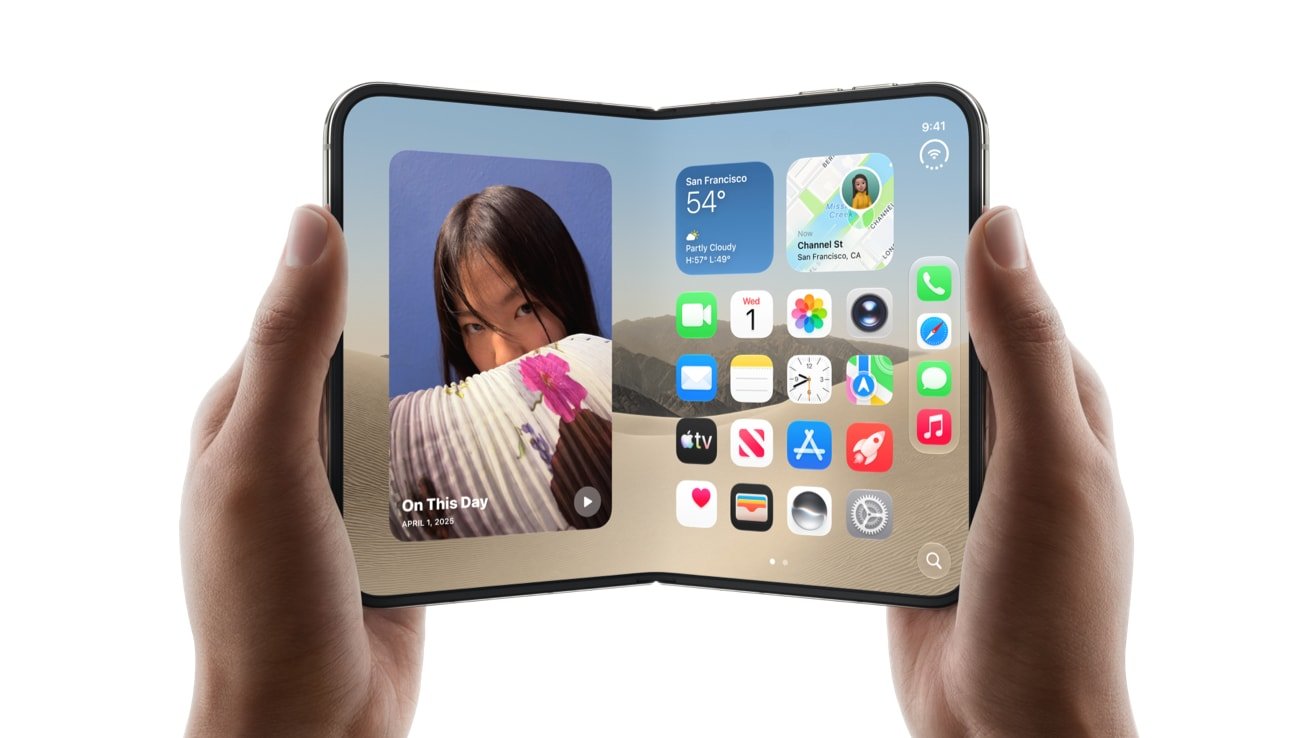
Apple held its September event on Wednesday the 9th at Apple Park, an hour and fifteen minutes of broadcast built around a headline that had been nearly a decade in the making: the foldable iPhone is real, it’s called iPhone Duo, and it has a release date.
It was also the first keynote Tim Cook didn’t present. John Ternus took over on September 1 and opened the broadcast from minute one, a change of face that’s no small detail at Apple.
And there’s an absence that defines the year just as much as the foldable does: there’s no plain iPhone 18 this September. The lineup splits between the Duo, the iPhone 18 Pro, and the iPhone 18 Pro Max, with the non-Pro models pushed to the first half of 2027. Apple has split its iPhone calendar in two, and this is the first time it’s really showing.
Rounding out the event were the Apple Watch Series 12, the Apple Watch Ultra 4, the AirPods 5, and the version of Siri Apple has been promising for two years. Below is everything, with what each product actually brings and when it arrives.
iPhone Duo: the foldable finally exists
Apple showed up last to foldables, with rivals holding a years-long head start, and did what it always does: arrive late with the exact problem nobody had fully solved already fixed. In this case, two of them.
Two screens, the same aspect ratio
7.6 inches inside · 5.4 outside · Super Retina XDR
Opened up, it’s a 7.6-inch Super Retina XDR display; closed, a 5.4-inch one. The detail that matters isn’t the size, it’s that both share the same aspect ratio: opening and closing it, what’s on screen doesn’t stretch or get cropped, it just grows. That’s the detail that forces apps on other foldables to readjust every single time.
Both feature ProMotion, Always On, and 3,000 nits of peak outdoor brightness. And the inner display introduces something that, until now, was Apple monitor territory: a nano-texture anti-reflective finish, achieved here with a custom polymer layer that also adds rigidity.
The hinge: over a hundred parts
It’s the point where foldables tend to break. Apple built a hinge with more than a hundred components that does two things at once: support the center of the display when it’s open — so it doesn’t sag at the crease — and house a set of magnets that keeps it shut.
The hinge cover is 3D-printed titanium with a bead-blasted finish, and the chassis is mirror-polished grade 5 titanium. The back uses Ceramic Shield; the front, Ceramic Shield 2, which Apple rates at three times better scratch resistance.
Inside is a level of reinforcement detail you rarely see spelled out: high-strength glass above and below the folding panel with custom adhesives, a titanium plate at the base, structural ribs, and antenna gaps filled with ceramic fiber. IP68 rated, up to six meters for thirty minutes.
The camera you can’t see
The move nobody saw coming. The interior panel’s FaceTime camera sits under the display, with no cutout or notch: the large screen runs edge to edge, uninterrupted.
On the back is a 48MP Fusion main camera with a built-in 2x optical telephoto and a 48MP Fusion Ultra Wide, the same one on the 18 Pro, with macro. Up front, there’s also a Center Stage camera that shoots in any orientation.
What’s interesting is what Apple did with having two screens. Duo Preview shows the live preview on the outer display, so whoever’s being photographed can see themselves. Smart Take reads the scene and only fires when it detects everyone’s ready. And Kid Cue plays Peanuts animations on the outer screen to get kids looking at the camera, one of those ideas that sounds like a gimmick until you’ve tried photographing a three-year-old.
On video: 4K at 120 fps in Dolby Vision, cinematic effects you can apply after shooting at up to 60 fps, and 4K time-lapse with Dolby Vision HDR.
An iOS that folds
Ships with iOS 27.1
This is where the fine-tuning shows. With the Duo open, the lock screen controls, the Dock, and navigation shift to the side instead of sitting at the bottom, so they don’t eat into vertical space. The status bar collapses into a circle tucked in the corner, and the Dynamic Island gets redesigned vertically to live on the side.
Content reacts as the device folds, reorients when you rotate it, and jumps from one screen to the other when you flip it. And for the first time on an iPhone, there’s Split View: two apps at once, quick switching between them, two windows of the same app, and app pairs you can save to reopen together later.
There’s one detail that sums up the idea well: you can have a conversation with Siri on one half while still watching content on the other. It’s the kind of thing that justifies a big screen better than any promo video could.
Two batteries, one per side
A dual-battery setup, with a high-density cell on each half. Apple’s figures are broken down by which display you use, which is more transparent than usual: up to 31 hours of video using only the inner display, up to 44 using only the outer one, and up to 24 hours of use split evenly between both.
Charges to 50% in about 20 minutes over a cable and about 30 wirelessly, with MagSafe or Qi2. Storage runs from 256GB to 2TB, in two finishes: Star White and Midnight Sky. It’s eSIM-only worldwide, with no SIM tray in any market.
And one note for later: it will support Apple Pencil with USB-C before the end of 2026.
iPhone 18 Pro and Pro Max: the year of the camera
With no standard iPhone 18 alongside them, the Pro models carry the season on their own. And the case for them isn’t the screen or the design: it’s the chip, the cooling, and a camera that brings back an idea photography had long considered lost on a phone.
A20 Pro: 2 nanometers and a vapor chamber three times larger
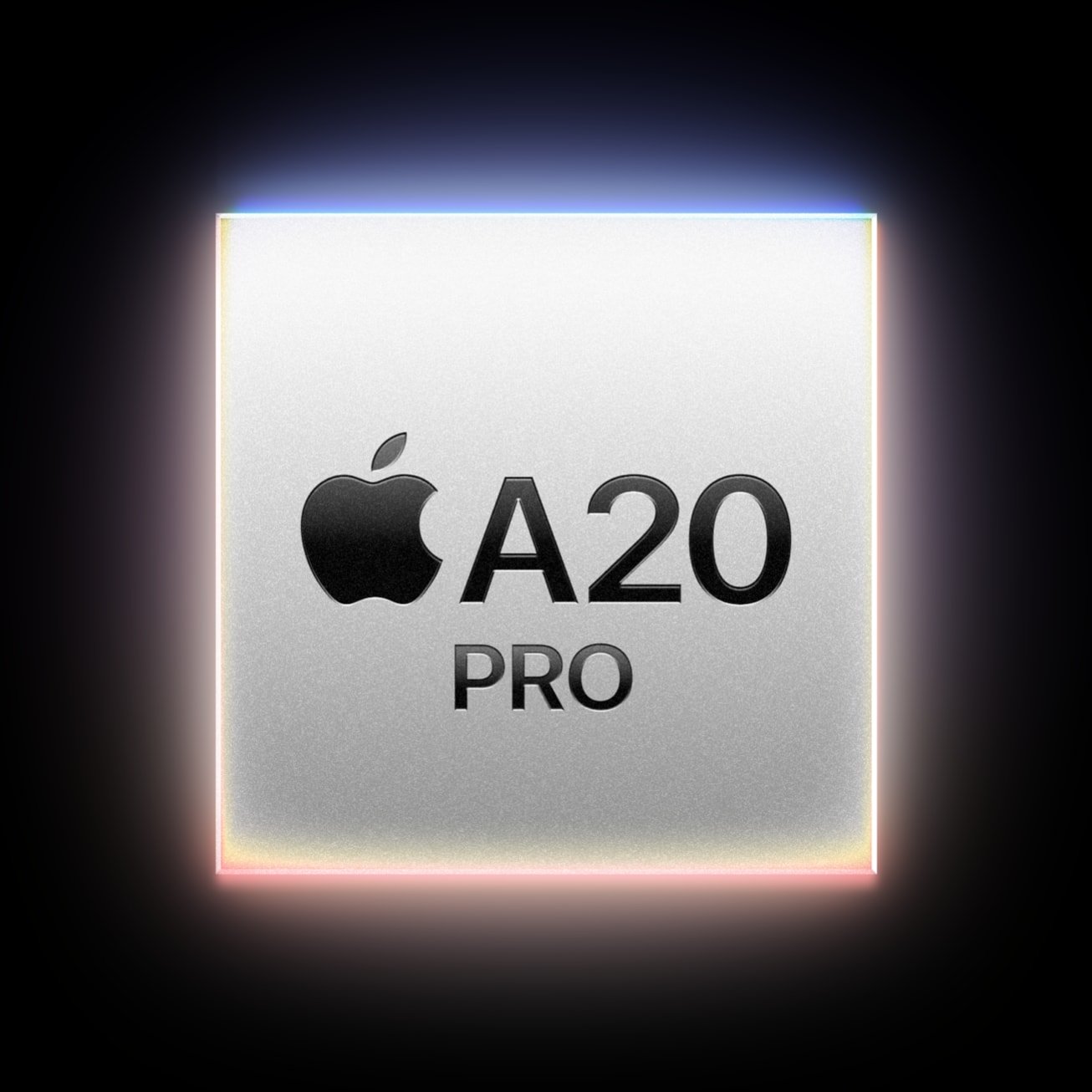
The A20 Pro is built on a 2-nanometer process and packs a 6-core CPU with built-in neural accelerators, a 7-core GPU, and a dual 16-core Neural Engine, 32 cores total. Compared to the A19 Pro: the GPU is 40% faster, AI processing power doubles, and memory bandwidth climbs 50%.
But the number that actually matters is somewhere else. Sustained performance climbs by up to 40%, and that’s not down to the chip — it’s down to the cooling. The vapor chamber has three times the surface area of the one in the iPhone 17 Pro, and the packaging — inspired by the M-series chips — places the silicon next to the memory instead of on top of it, keeping it out of the thermal path.
Translation: how fast it runs in the first minute matters less than whether it’s still running just as fast at the twentieth. That’s the difference between a benchmark number and shooting 4K video without the phone throttling itself.
Variable aperture: six laser-cut blades
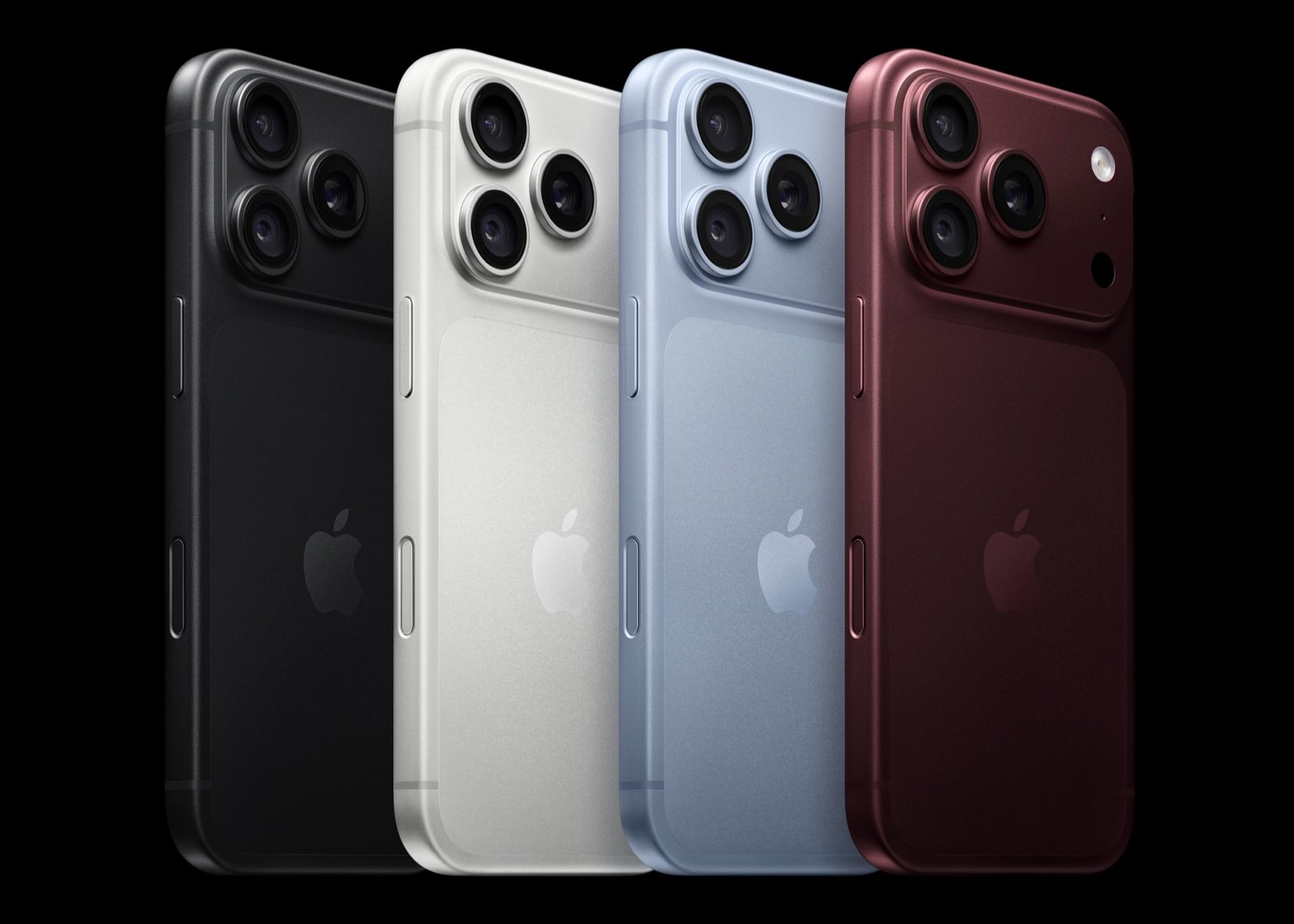
The big camera announcement of the night. The 48MP Fusion main camera gets a real physical diaphragm, with six laser-cut blades and four positions: ƒ/1.48, ƒ/1.8, ƒ/2.8, and ƒ/4.
This isn’t software-calculated blur. It’s real optical depth of field, chosen before you shoot: wide open to separate a portrait from the background in low light, stopped down to ƒ/4 to keep a landscape sharp front to back. You control it manually from the Camera app, and Apple has opened up an API for third-party apps to control the range.
It comes alongside controls that used to require a separate app: shutter speed, white balance, and a histogram, now built into the Camera app, with a customizable interface.
Apple Reference Image: a negative you can’t touch
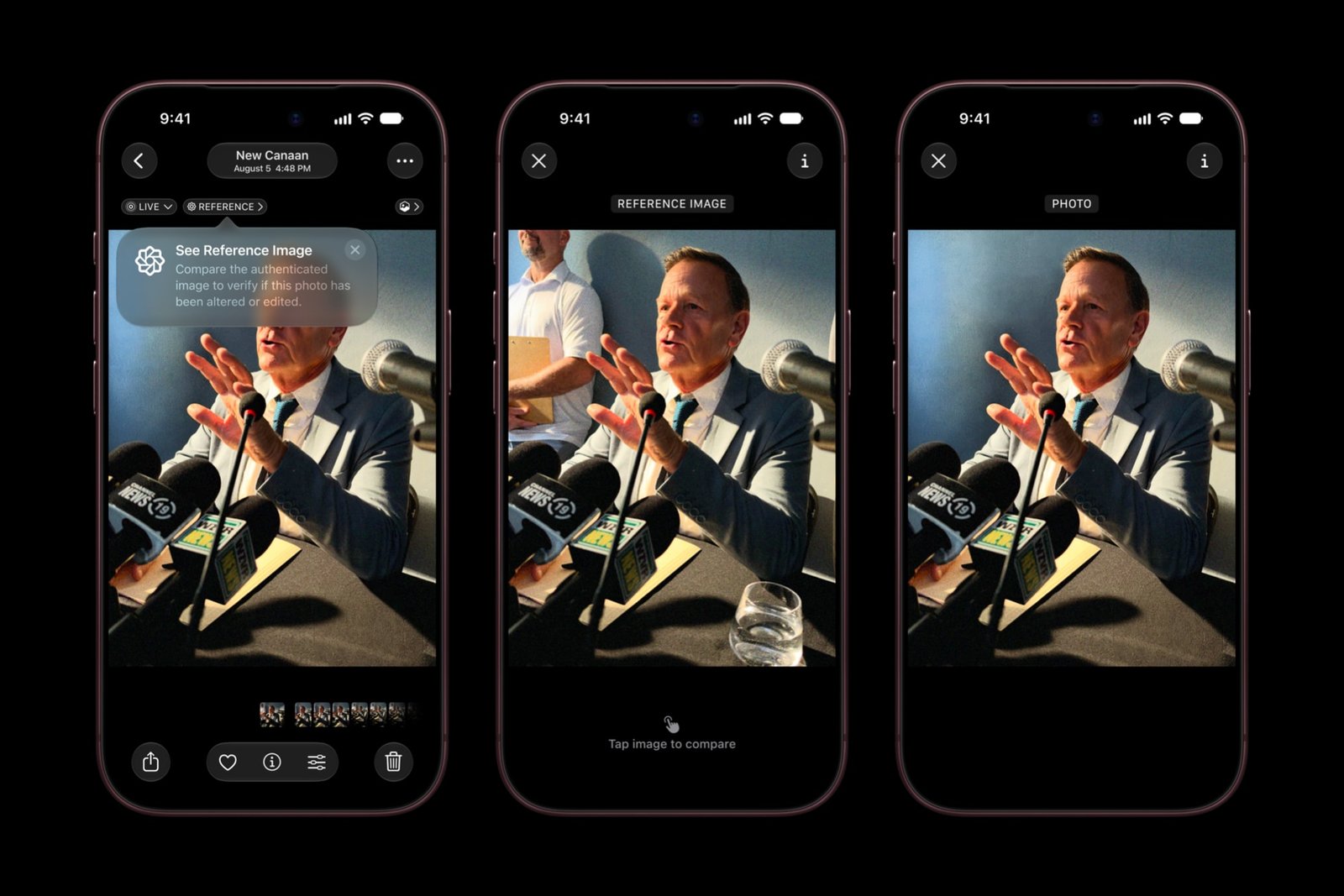
The strangest announcement of the night, and probably the most important one five years from now. The main sensor signs every pixel it captures, and that signature gets turned, via Private Cloud Compute, into an unalterable reference image.
In practice, it’s a digital negative: you can edit the photo however much you want, but the Photos app keeps the signed version saved right alongside it, the one that proves what the sensor actually saw. With AI image generation now trivial, a phone that can certify a photo is really a photo stops being a technical curiosity.
There’s fine print worth spelling out: it’s optional, there’s an API for third-party apps on iOS, iPadOS, and macOS 27, it won’t be available in China at launch, and in the European Union capture isn’t available out of the gate either.
Battery, modem, and the eSIM detail
There’s a nuance here that’s easy to miss: the headline battery figures belong to the eSIM-only models, which, with no SIM tray, fit a bigger battery and gain two extra hours of video. With that caveat, the 18 Pro reaches 36 hours of video playback and the Pro Max hits 45, with up to 30 hours of use per charge under Apple’s new estimation model, which it says is based on real usage data.
Charging is the eye-catching part: 50% in about 15 minutes over a cable, and on the Pro Max, five minutes plugged in gets you about seven hours of video.
On connectivity, Apple’s N1 chip returns — Wi-Fi 7, Bluetooth 6, and Thread — alongside the new C2 modem, which boosts upload speed over the C1X, uses 15% less power, and adds mmWave in the United States. The Dynamic Island, meanwhile, can now show three Live Activities at once.
Four finishes — black, silver, glacier, and burgundy — and storage from 256GB to 2TB.
Apple Watch Series 12 and Ultra 4: the watch that measures sixty times more often
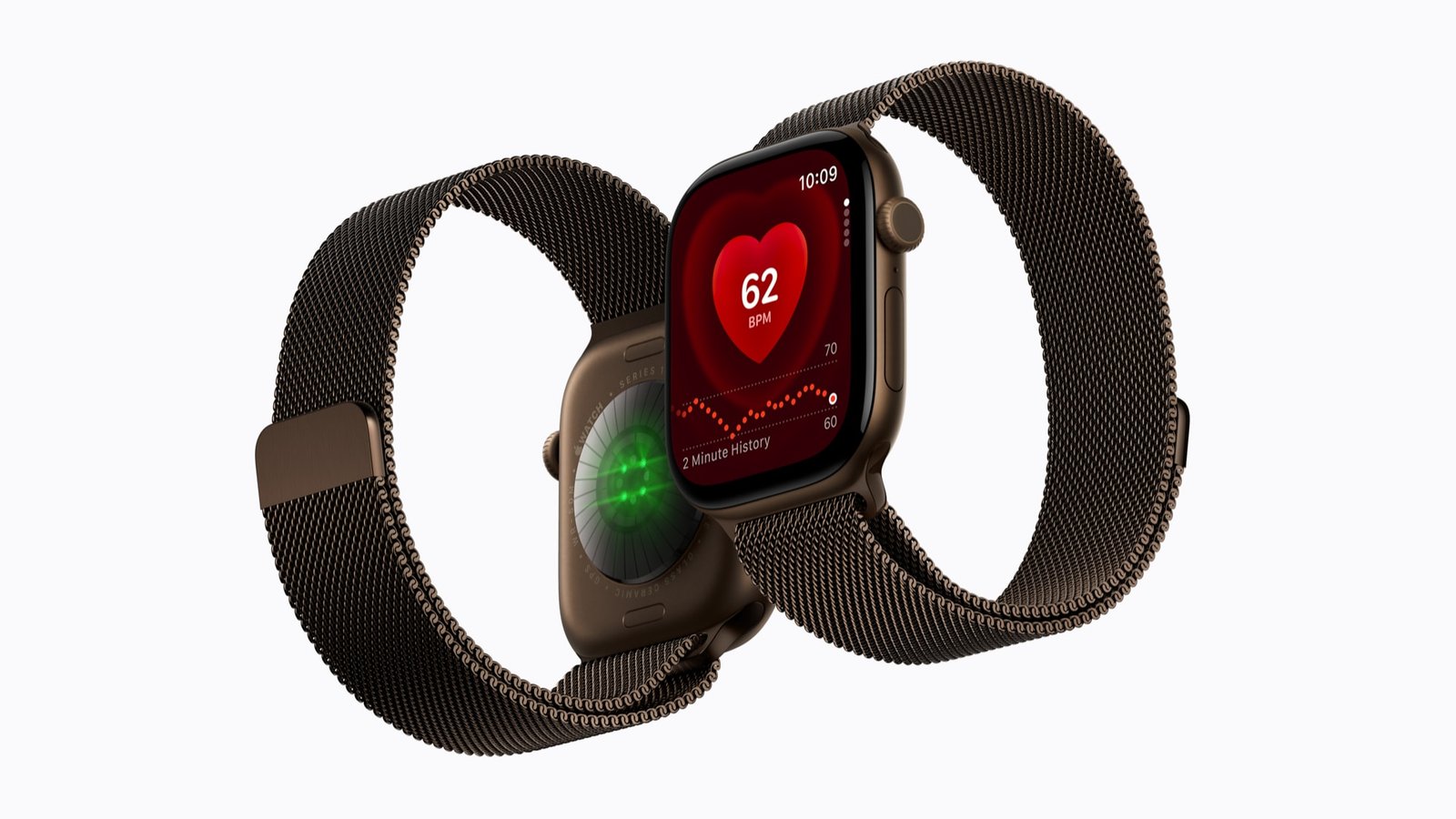
Both watches share the same core upgrade, and it’s the kind you can’t see in a photo: a rebuilt sensor system, with new optical and electrical sensors and larger, more efficient green LEDs.

What actually changes: the frequency
The headline is measuring heart rate every five seconds, all day long, sixty times more often than the previous generation, and heart rate variability every five minutes, twenty-four times more often. Apple calls it the most accurate heart rate measurement on a device of this kind.
Two new features build on that data: Readiness Score, which gives a single daily score combining activity, vitals, and sleep, and Sleep Score, which rates duration, schedule consistency, and how often you wake up. Still on board are hypertension notifications and sleep apnea notifications, ECG, blood oxygen, and cycle tracking with perimenopause pattern detection.
Audio Intelligence: the watch that listens
A feature nobody saw coming, and it leans on the S11 chip to process audio right on the watch. Live Rewind transcribes, with two taps on the crown, whatever was said in the last fifteen seconds — built for when someone rattles off an address or a phone number and you miss it. Siri Recap turns a conversation into notes with a title, a summary, and key points. And sound recognition flags sirens, alarms, doorbells, or a crying baby. Live Rewind and Siri Recap arrive in beta by the end of 2026.
Series 12
42 and 46 mm · up to 2,000 nits · up to 24 hours
The thinnest Apple Watch yet, with a wide-angle Always-On Retina display and up to 2,000 nits. Battery life is 24 hours of normal use, 38 in low power mode, and 15 minutes of charging gets you up to 12 hours. Ceramic Shield 2 front crystal, 60% harder than Ion-X. Aluminum in dark bronze, light gold, black, and space gray; ceramic in pearl white and midnight blue; titanium in radiant gold and natural. 5G and WR50 and IP6X water and dust resistance.
Ultra 4
49 mm · up to 3,000 nits · up to 50 hours
Same size and weight as the Ultra 3, with aerospace-grade titanium in natural and black, sapphire crystal, and 3,000 nits. Battery life is its selling point: 50 hours of normal use, 84 in low power mode, 18 hours of workout tracking, and up to 45 in extended mode, with 15 minutes of charging for 18 hours.
It keeps built-in satellite connectivity — with two years of service included — for emergency SOS, messages, and Find My without cell coverage, WR100 water resistance for recreational diving down to 40 meters with Oceanic+, dual-frequency GPS, Backtrack, turn-by-turn hiking routes, and downloadable maps.
AirPods 5: noise cancellation without a seal
Open-ear design · H2 chip · IP57
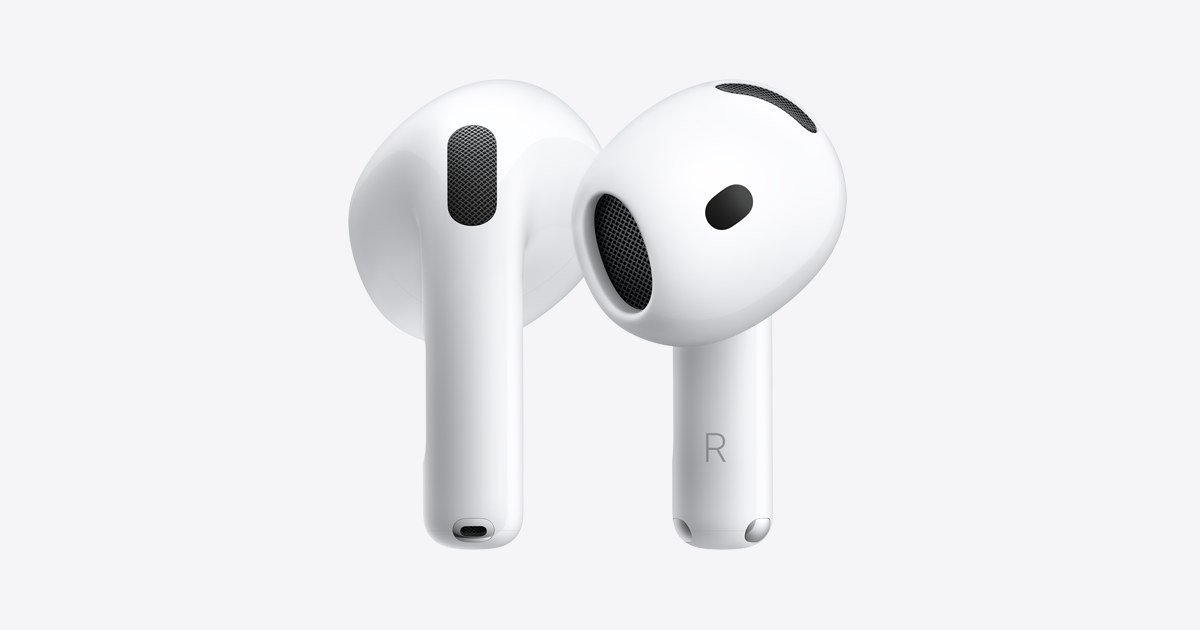
The trick with these AirPods is in the contradiction they solve: they have an open-ear design — no silicone tip sealing the ear canal — and yet Apple claims up to 1.5 times more active noise cancellation than the previous generation. Canceling noise without sealing the ear canal is exactly the hard part.
It pulls this off with a redesigned multiport acoustic architecture and a next-generation adaptive equalizer that tunes sound across a wider frequency range. Transparency mode sticks around, along with Adaptive Audio, which blends the two modes in real time, and Conversation Awareness.
Battery life is 4 hours with active noise cancellation on, 5 with the wireless charging case version, and 22 hours total counting the case, which now has a built-in speaker for locating it with Find My. IP57 resistance, personalized spatial audio with head tracking, studio-quality recording, voice isolation, and live translation in supported languages and regions.
Siri AI, iOS 27, and a rebuilt Health app
The other half of the event was software, and that’s where Apple’s longest-standing promise finally shows up.
The Siri that’s been two years in the making
It arrives in beta with iOS 27, and Apple describes it as an entirely new version. The specifics: it understands personal context by cross-referencing messages, emails, and photos; it has on-screen awareness to act on whatever’s displayed; it searches the web when it needs current information; it lets you type out what you want in your own words; and it gets its own dedicated app, with conversation history synced through iCloud.
And here’s the fine print again, and it’s a long one: it launches in English only, with French, Japanese, Korean, Portuguese, and Spanish following in October 2026; it’s not available at launch in the European Union; and it’s not accessible to users under 13.
iOS 27, on September 14
Free update on September 14. It brings a redesign, Liquid Glass customization options, and new parental control tools. In photo editing there’s Spatial Reframe, Extend, and an improved Clean Up tool; Image Playground now generates photorealistic images; and Safari gets Notify Me, which watches a page and alerts you when it changes.
There’s also a commitment worth noting: Apple has announced SynthID support for identifying AI-generated or AI-edited images. Together with the 18 Pro’s reference image feature, it points to where the company’s big bet is headed.
The Health app, by the end of 2026
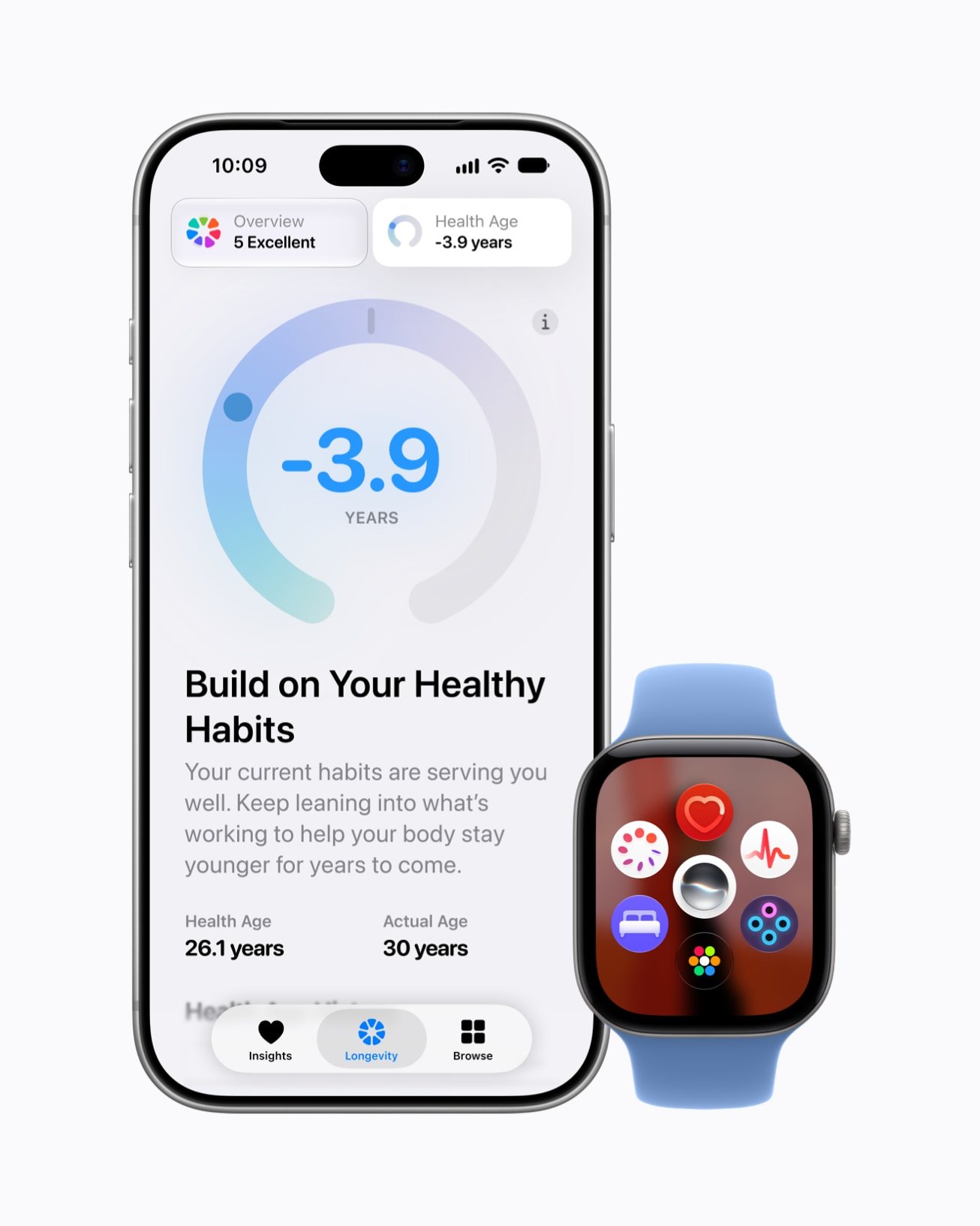
A complete redesign with Apple Intelligence built in, plus two new ideas. Health Age calculates which factors are adding or subtracting years by cross-referencing VO2 max, heart rate variability, sleep, and lab results. And a new longevity tab groups heart, sleep, and movement metrics with more in-depth assessments. It arrives by the end of the year.
All the release dates
Everything announced on September 9, with the dates Apple gave.
| Product | Announced dates |
|---|---|
| iOS 27 | Free update on September 14, 2026 |
| iPhone 18 Pro | Preorders on September 12 · in stores September 18 in more than 65 countries · second wave September 25 in 20 more |
| iPhone 18 Pro Max | Preorders on September 12 · in stores September 18 in more than 65 countries · second wave September 25 in 20 more |
| Apple Watch Series 12 | Preorders starting September 18, 2026 |
| Apple Watch Ultra 4 | Preorders starting September 18, 2026 |
| AirPods 5 | Preorders starting September 18, 2026 |
| iPhone Duo | Preorders on October 16 · in stores October 23 in more than 70 countries · 28 more countries on October 30 |
| Siri AI in Spanish | October 2026 |
| Redesigned Health app | Late 2026 |
| Live Rewind and Siri Recap | In beta by late 2026 |
| Apple Pencil for iPhone Duo | Before the end of 2026 |
| iPhone 18 and non-Pro models | First half of 2027 |
What the keynote leaves behind
The iPhone Duo is the headline, and not for showing up but for how it shows up. Apple arrived years late to foldables and brought along solutions to the two things that kept bugging the category: an interior display with no cutout, with the camera hidden underneath, and an operating system built to fold instead of a stretched-out phone. That both displays share the same aspect ratio sounds like a spec-sheet detail, and it’s exactly the opposite.
On the 18 Pro, what matters isn’t the chip: it’s the cooling. A 40% jump in sustained performance thanks to a vapor chamber three times larger says more about real-world use than any GPU number. And the variable aperture marks the return of a genuine optical idea to a phone, after years of solving everything through software.
Apple Reference Image is the long-term bet, even if it looks minor today. A sensor that signs what it sees and leaves behind a negative that can’t be altered is a direct answer to the problem that’s coming: once anyone can generate a convincing photo, being able to prove which one isn’t is worth more than one extra megapixel.
And then there’s what Apple still owes. The new Siri launches in beta, English only and without the European Union, with Spanish arriving in October. The rebuilt Health app, by year’s end. Live Rewind and Siri Recap, in beta by year’s end. That’s a lot of keynote up front and a fair amount of calendar still to come; the real test isn’t this week, it’s in October and December.