
 English
  Español
  Deutsch
  Français
  Português
  Italiano
  Nederlands
  Polski
  Svenska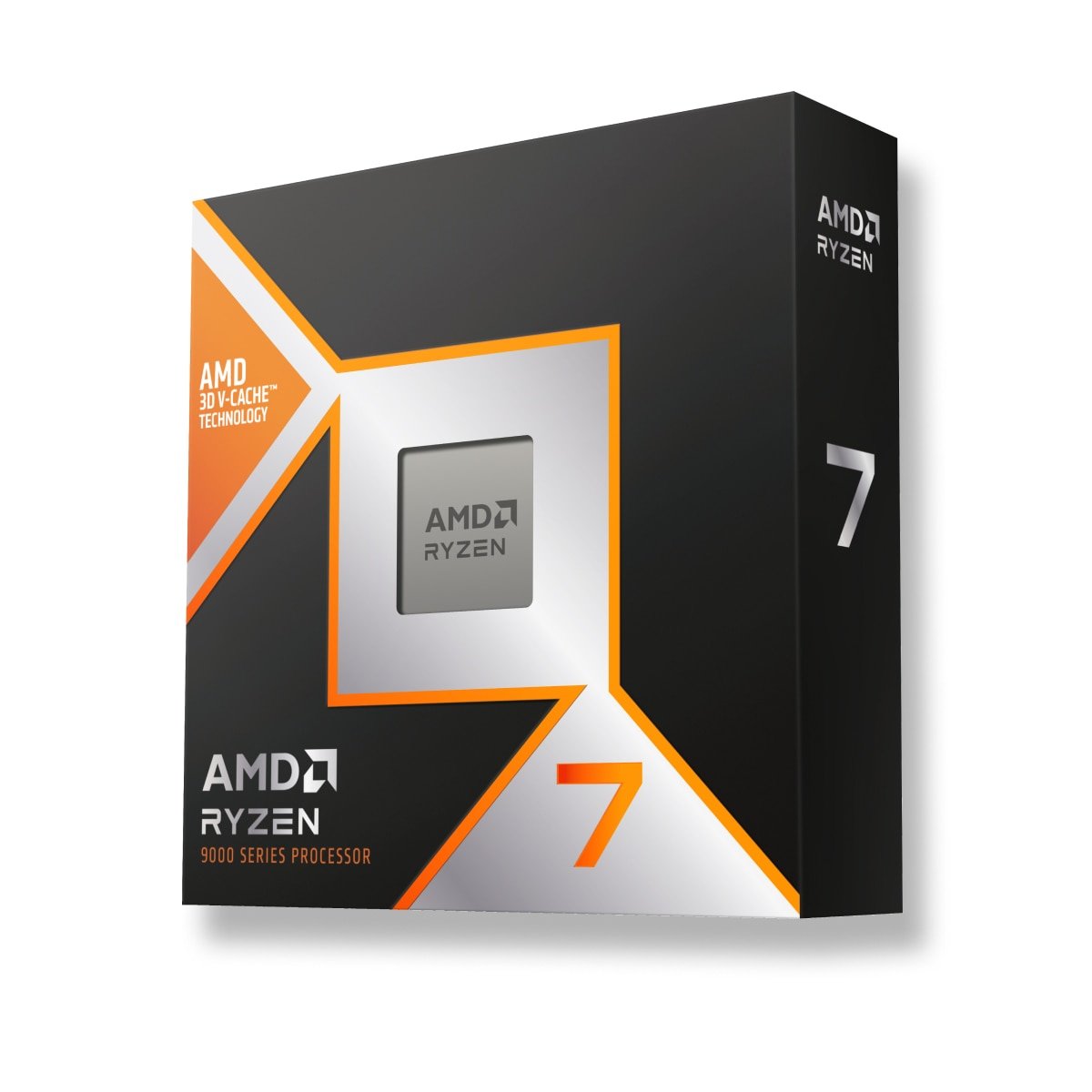
It's easy to assume a CPU with more cores always performs better in games. That's usually true for productivity work, but the relationship is far less direct in gaming — which is exactly where 3D V-Cache comes in, the technology that turned AMD's Ryzen X3D chips into the go-to choice for gaming builds.
What 3D V-Cache actually is
3D V-Cache is an extra layer of L3 cache that AMD physically stacks on top of the processor die, instead of expanding it sideways on the same silicon. The result is a chip with two to three times more L3 cache than its non-X3D equivalent, without needing a larger die.
L3 cache holds data the CPU needs to access constantly. The more of a game's working data fits there, the fewer trips the CPU has to make to system RAM, which is far slower. In games with lots of objects on screen, large open worlds, or complex simulations, that translates into steadier frame times and fewer sudden FPS dips.
Why gaming doesn't scale the way productivity does
Most current game engines don't distribute load well across more than 6-8 cores. 3D rendering, video editing, or code compilation genuinely use 16 or 32 cores in parallel; a game engine, by contrast, usually leans heavily on one or two "primary" cores running fast, rather than needing dozens of cores available.
That's why an 8-core CPU with 3D V-Cache can outperform a 16-core chip without that extra cache in FPS terms, despite having half the cores on paper.
How many cores you actually need
For pure gaming, 6-8 modern cores are enough in 2026, and adding more barely moves the needle on in-game performance. The real reason to step up to 12 or 16 cores isn't gaming itself — it's parallel workloads: streaming while you play, recording and editing footage, or running heavy background apps.
If gaming is your only use case, prioritize a CPU with strong cache (ideally 3D V-Cache) over one with more cores but standard cache. If you also create content, that's when extra cores start to pay off.