
 English
  Español
  Deutsch
  Français
  Português
  Italiano
  Nederlands
  Polski
  Svenska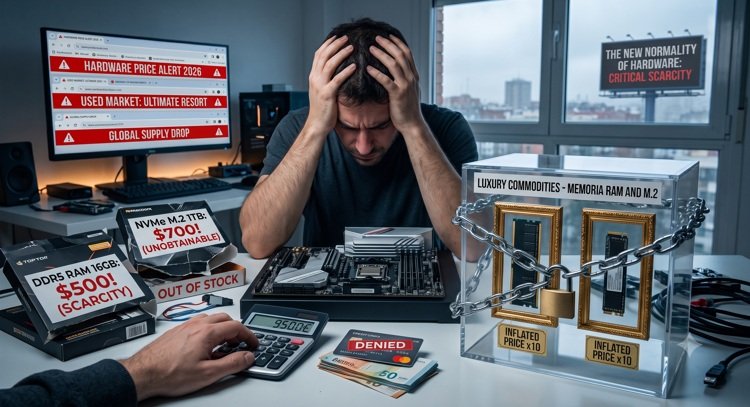
We've spent months treating the memory shortage as a temporary hiccup, something that'll sort itself out "next quarter." At this point in 2026, with Nvidia rolling out its third price hike of the year and Samsung warning that its DRAM prices are only going up further, I think it's time to stop treating this as an anomaly and start treating it as the new baseline.
Why this time is different
Component price spikes aren't new — we saw something similar with crypto mining a few years back. The difference is that was a demand bubble that eventually popped. This time, the demand competing for memory is coming from AI data centers, and it shows no sign of slowing down anytime soon: several manufacturers are already saying real relief isn't likely before late 2027.
What that means if you're buying
If building or upgrading a gaming PC has become systematically more expensive every few months, "I'll wait for it to come down" stops being a sound strategy. It makes more sense to buy when the part you need is at a reasonable price than to wait for a discount that, for now, isn't in sight.
That's not great news if you're squeezing every last bit out of last-gen hardware, but the sooner we accept it, the better we can plan the next purchase.