
 English
  Español
  Deutsch
  Français
  Português
  Italiano
  Nederlands
  Polski
  Svenska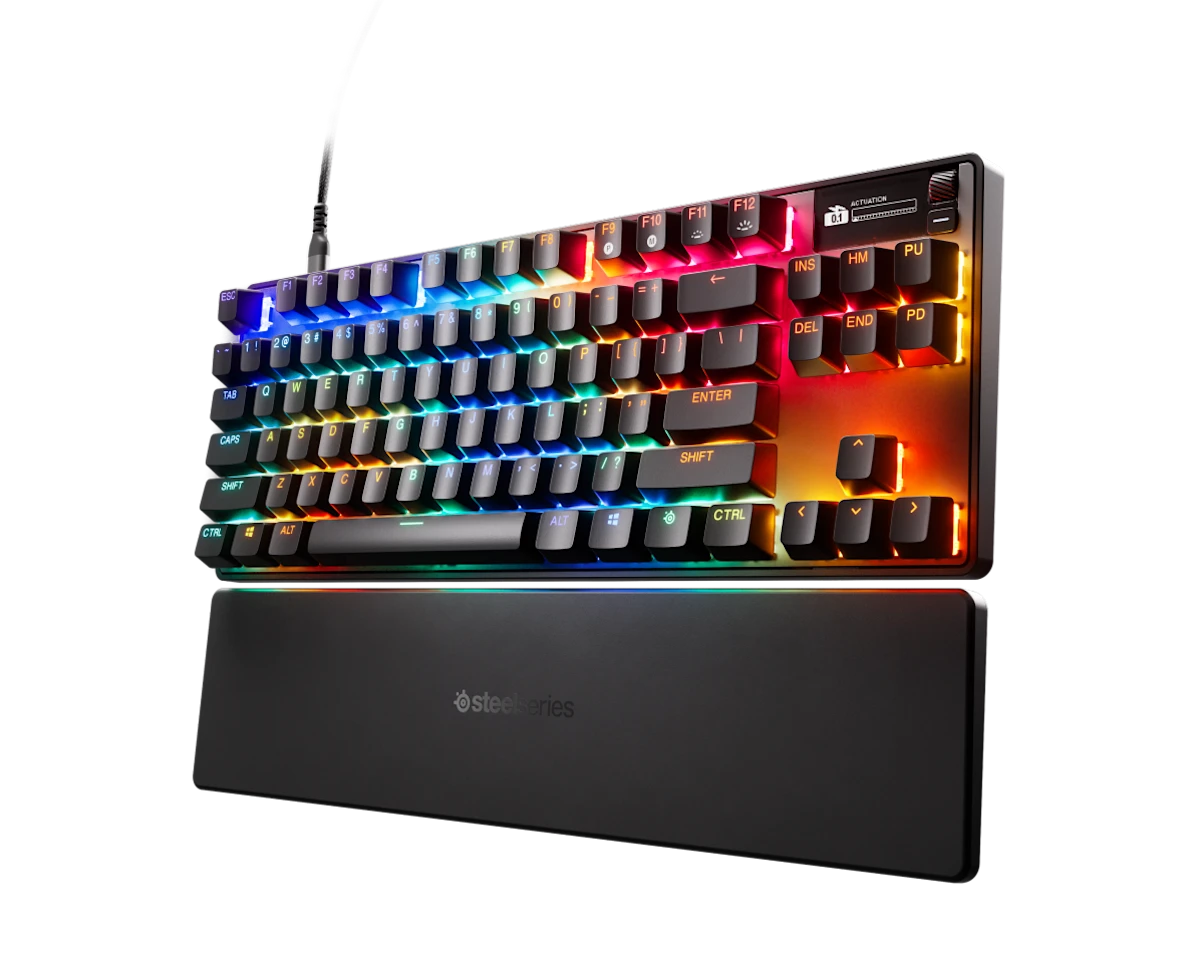
For years, "mechanical keyboard" meant a physical contact inside the switch: press the key, two metal pieces touch, and the circuit closes. Magnetic switches — also called Hall Effect switches — replace that entire premise, which is why more and more brands are putting them in their flagship boards.
How a Hall Effect switch actually works
Instead of an electrical contact, the switch stem carries a small magnet. Underneath it, a Hall sensor continuously measures the distance between the magnet and the sensor as the key travels down. There's no electrical "click" at a fixed point — the keyboard always knows exactly how deep the key is, not just whether it's pressed or not.
That difference — continuous measurement instead of a simple on/off switch — is what unlocks everything else.
Adjustable actuation and Rapid Trigger
Because the keyboard knows the key's exact position, it can let you decide at what depth a press registers, typically anywhere from 0.1mm to 4mm depending on the board. Lowering that actuation point shortens the time between your press and the game reacting.
The feature that matters most for actually playing is Rapid Trigger: the keyboard registers a key release almost instantly as soon as you start letting go, instead of waiting for it to travel all the way back up. In games built around counter-strafing or rapid direction changes, that translates into noticeably cleaner input compared to a traditional mechanical switch.
Is the extra cost worth it?
Hall Effect switches have no physical contact to wear out, so in theory they outlast an equivalent mechanical switch by a wide margin before failing. They're also somewhat more resistant to dust and contact corrosion, a real issue on mechanical switches after years of use.
The trade-off is price: a magnetic-switch keyboard typically costs more than its mechanical equivalent. For competitive FPS or shooter play where milliseconds matter, that jump is worth it. For general use or typing, a quality mechanical board is still a perfectly valid, cheaper option.