
 English
  Español
  Deutsch
  Français
  Português
  Italiano
  Nederlands
  Polski
  Svenska
Entry-level: wired, no frills
Everything in this group plugs in with a cable, and that is the point: no battery to charge, no dongle to lose, no latency to argue about. What you give up is convenience and software tuning, not sound — a wired headset here will out-perform a wireless one at the same price, because none of the money went into a radio.
Some people just want a headset that works and then disappears on their head, and that is the whole brief for the HyperX Cloud Stinger 2 Core. It is light, the earcups swivel flat, and the mic mutes when you flip it up — no menus, no software, no battery to remember. What you give up is any kind of wireless and any kind of tuning.

The odd one out here, and the connector is why. A plain 3.5 mm jack means the JBL Quantum 100M2 works on a PC, a laptop, a Switch, a PS5 pad and a phone with no adapters and no dongle, and the boom mic detaches so it doubles as ordinary headphones on the way out of the house. If you went looking for headphones with a microphone rather than for a gaming headset, this is probably the one you meant.
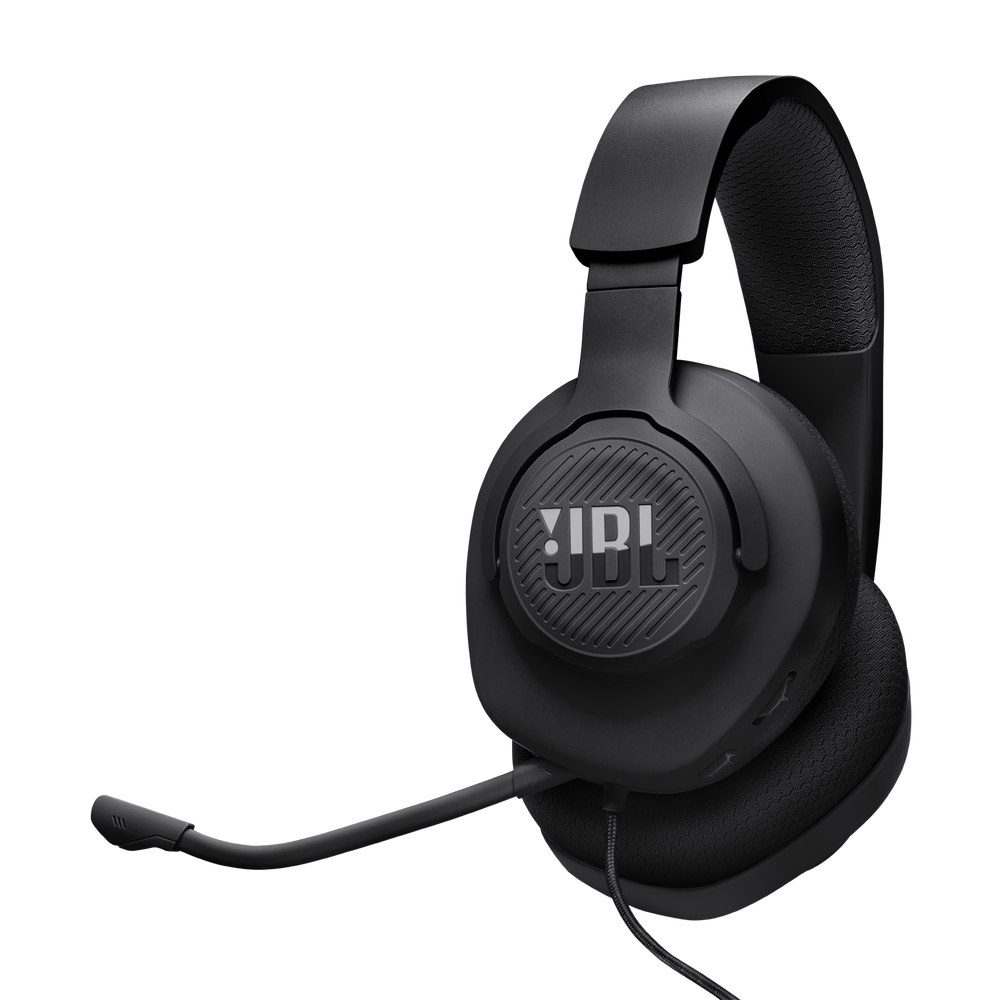
JBL Quantum 100M2
★★★★☆4.3
- A plain 3.5 mm jack works on PC, console, Switch and phone
- Detachable boom mic, so it doubles as normal headphones
- Memory foam cushions at the entry level
- Stereo only, with no virtual surround processing
- Several versions share one listing — check which variant you pick
A USB adapter for virtual surround comes in the box, which quietly makes the Corsair HS55 Surround two products depending on which end you plug in: analogue and universal, or USB and positional. Memory foam earcups and a low weight keep it comfortable well past the point where heavier headsets start to ache.

Competitive shooters are the target, and the priorities show: heavy passive isolation from the closed earcups, a cardioid mic that rejects most of what is not your voice, and no lighting or wireless radio to pay for. The Razer BlackShark V2 X is also the most reviewed headset in this comparison by a wide margin, which tells you how many people have already made this exact decision.
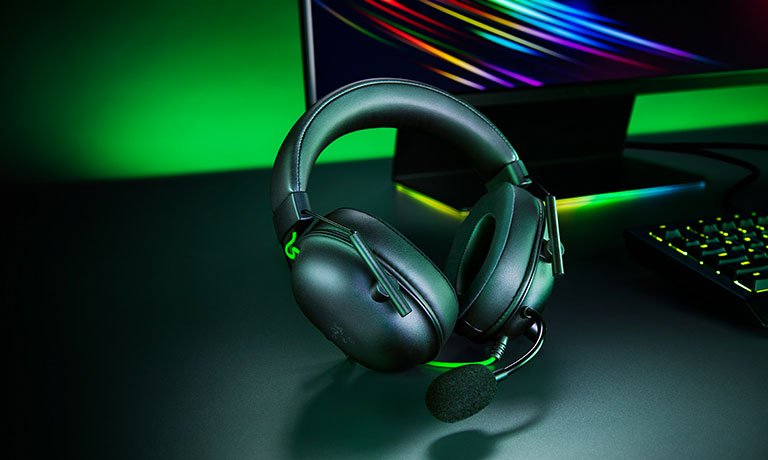
Razer BlackShark V2 X
★★★★☆4.5Best value for money
- Closed earcups block a lot of room noise passively
- Cardioid mic rejects most of what is not your voice
- Light for a headset with 50 mm drivers
- Wired only, with no wireless version of this model
- No lighting and no on-headset controls beyond volume
The plainest headset on this page, and it earns its place by refusing to specialise: the Turtle Beach Recon 50 plugs into a PS5, an Xbox, a PC or a laptop with the same cable and asks nothing else of you. Treat it as the floor of the category.

A flip-up mic that mutes when you raise it, memory foam on the ear cushions and JBL’s Voice focus on the microphone. The JBL Quantum 200 is the sensible first upgrade from whatever came bundled with your console, and the mic is genuinely better than the price suggests.

Where JBL’s software starts to matter. The JBL Quantum 300 hooks into JBL Quantum Engine, which means the EQ and the mic settings live in an app instead of being fixed at the factory — which matters if you switch between very different genres in one evening.

The one with the dial. A game-chat balance wheel on the earcup of the JBL Quantum 400 lets you turn your squad down without leaving the match, which sounds trivial until the round where it isn’t. QuantumSURROUND and DTS handle positioning.

HyperX put DTS Headphone:X spatial audio into a headset this light, which is the whole argument for the HyperX Cloud Stinger 2. Swivel the mic up and it mutes. There is no app to install and no firmware to keep current.

The one people keep recommending years after release. Dual chamber drivers separate bass from mids inside each earcup, and the aluminium frame on the HyperX Cloud Alpha survives being thrown in a bag. The mic detaches, so it leaves the house as ordinary headphones.

Razer’s wired entry, and it arrives with both USB-C and Type A, which quietly makes the Razer Kraken V4 X the easy answer for a Steam Deck or a phone as well as a desktop. Cardioid mic, memory foam, and Chroma lighting if you want it.

Angled 53 mm drivers are the headline: instead of firing straight at your ear, the drivers in the HyperX Cloud III sit at an angle that widens the stage. Wired, with spatial audio and memory foam, and it covers PC, PS5 and Xbox on the same cable.

Mid-range: going wireless
This is the band where the cable disappears and the software arrives. Expect a 2.4 GHz dongle rather than plain Bluetooth — that is what keeps audio in step with the picture — and a companion app that does the tuning for you. Battery life turns into a specification that decides the purchase here.
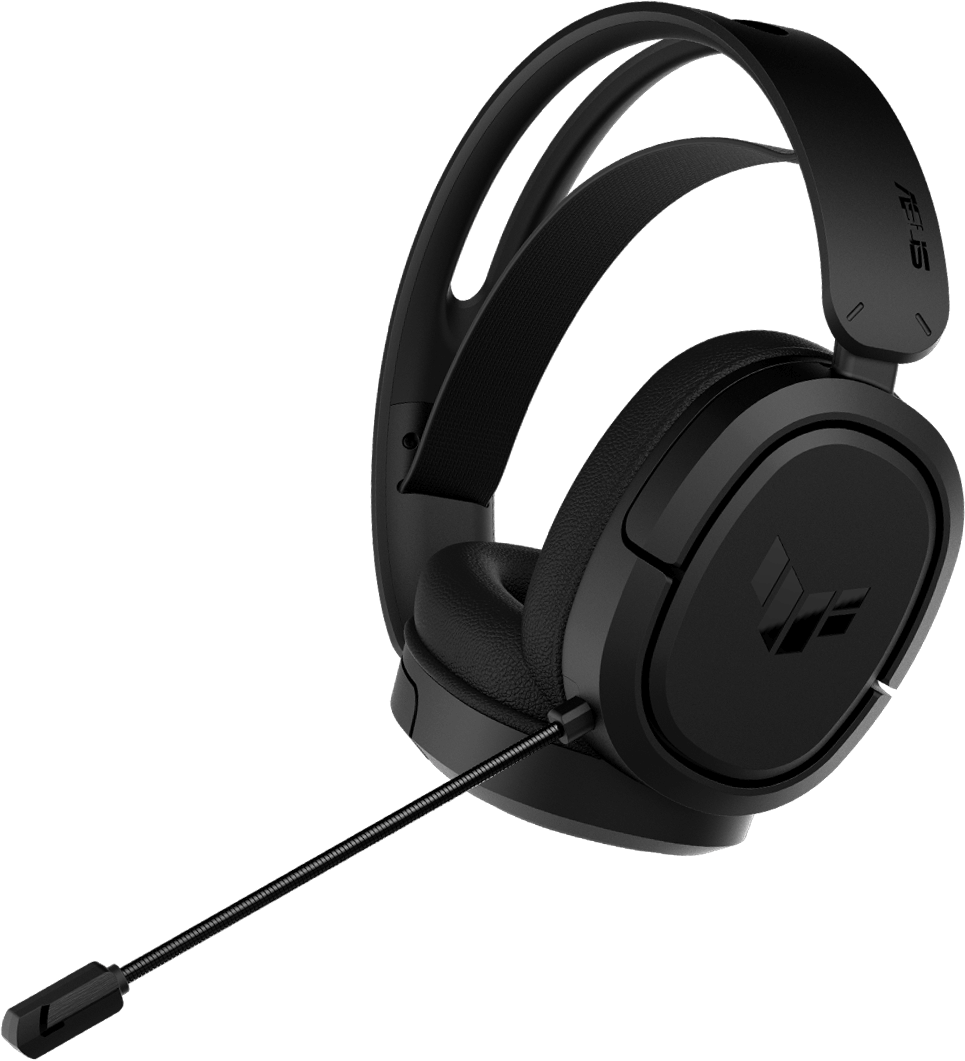
Cutting the cable usually costs more than this. A 2.4 GHz dongle keeps the ASUS TUF Gaming H1 Wireless latency-free enough for shooters, the battery lasts long enough that you charge it on your own schedule rather than mid-session, and virtual surround is handled in software. The build is plain plastic, which is exactly where the money was saved.
This is the one with the software story. A companion app carries hundreds of per-game audio presets for the SteelSeries Arctis Nova 5, so you pick your game from a list instead of learning what an equaliser does. It connects over both a 2.4 GHz dongle and Bluetooth, and the ClearCast mic retracts into the earcup when you are done talking.

SteelSeries Arctis Nova 5
★★★★☆4.5
- Connects over both a 2.4 GHz dongle and Bluetooth
- Companion app carries hundreds of per-game audio presets
- ClearCast mic retracts into the earcup when not in use
- The presets only help for games on the list
- You need the app installed to get the most out of it
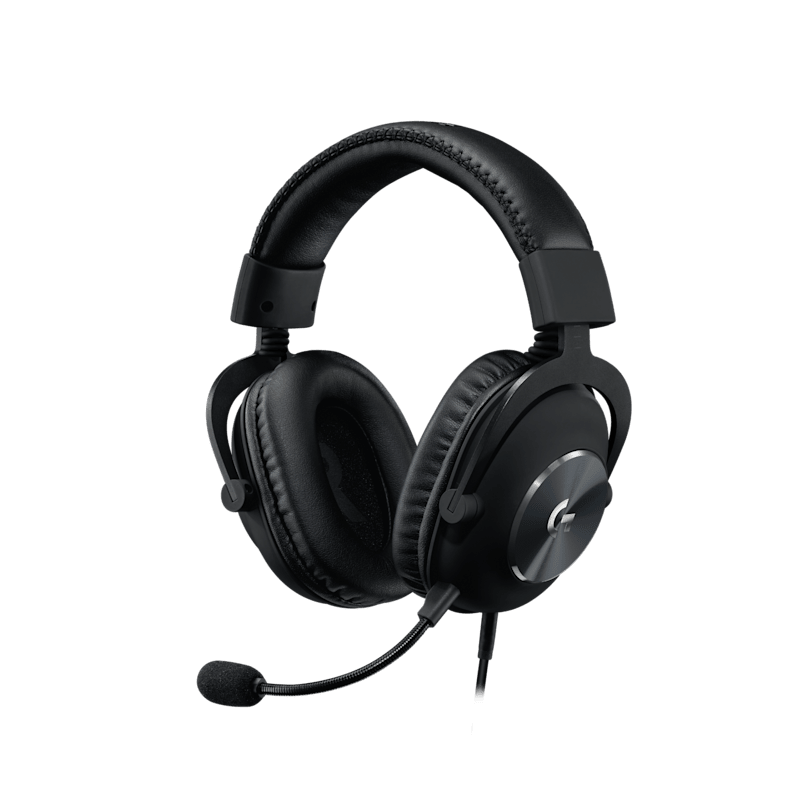
If you stream as much as you play, the microphone is the reason to look here. The Logitech G Pro X SE runs Blue VO!CE processing — noise reduction, a de-esser and compression applied before your voice ever leaves the headset — which gets a lot closer to a proper desk mic than a headset usually manages.
Eighty hours of battery is the number that matters here. You stop thinking about charging the Turtle Beach Stealth 600 altogether, which is most of what people actually want from wireless. Fifty-millimetre drivers, flip-to-mute mic, and it is built around the PS5 and PC rather than trying to cover everything.

The MAX in the name of the Turtle Beach Stealth 600 Gen 2 MAX is about range and battery rather than sound. It is an amplified multiplatform headset that covers PS5, PS4 and Switch on the same dongle, which makes it the one to pick if your consoles outnumber your desks.

Thirty hours of battery and memory foam cushions, aimed squarely at PlayStation. The HyperX Cloud Flight strips out lighting and software and spends the money on the parts that touch your head, which is a trade a lot of people would take knowingly.

The sequel adds the thing the original refused to have. RGB lighting on the HyperX Cloud Flight 2 sits under removable earcup plates, so you can change the look without changing the headset — and turn the whole thing off when you are done with it.

A hundred and twenty hours, plus both 2.4 GHz and Bluetooth in the same headset. The HyperX Cloud III S Wireless covers the two things people usually have to choose between: low-latency play on the dongle, and everything else — phone, tablet, work call — over Bluetooth.

Buy the SteelSeries Arctis Nova 5X for the software. A companion app carries per-game audio presets, so instead of learning what to do with an equaliser you pick your game from a list. It connects across several systems, which is where the X in the name comes from.

Three ways in — 2.4 GHz, Bluetooth and USB — and a super wideband mic, which is Razer’s way of saying your voice gets more of the frequency range than a normal headset mic allows. The Razer Kraken V4 is aimed at people who talk as much as they play.

Fifty-millimetre drivers and a cardioid mic in a headset built for competitive play. The Razer BlackShark V3 X HyperSpeed pairs over 2.4 GHz for matches and Bluetooth for everything else, and skips the extras that would push the weight up.

PLAYSYNC is the reason to look at the Logitech G Astro A20 X: it switches between PS5, Xbox, PC and Switch without re-pairing, which is a genuinely rare thing. If your desk has more than one machine under it, this is the one that stops the dongle shuffle.

Xbox-first, and honest about it. The Astro A20 Gen 2 Wireless is built for Series X|S and Xbox One and does not pretend to cover PlayStation, which is why the pairing is as simple as it is.

High-end: when the mic matters
Past this point you are mostly paying for the microphone and for what surrounds it: noise cancelling, spatial audio, head tracking, better materials on the parts that touch your head. If nobody hears you talk, the money is better spent higher up this page.
Past a certain point the microphone stops being an afterthought, and the omnidirectional broadcast-grade mic on the Corsair HS80 RGB Wireless is the reason to buy it rather than a bullet point on the box. The floating headband spreads the weight well enough that you stop noticing it is there, and Dolby Atmos handles the spatial side.

Active noise cancelling is the dividing line here, and the Sony INZONE H9 II is the only headset on this page that has it. Sony tuned it for the PS5’s spatial audio, so it makes most sense sitting next to a console rather than a PC. It is also at the top of this page on specification, and it is one of the few here built for comparison, and its rating reflects a handful of people who expected more for that.

Sony INZONE H9 II
★★★★☆4.0
- Active noise cancelling, not just mic-side noise reduction
- Developed with Fnatic, with presets tuned for Valorant and Apex Legends
- Tuned for the PS5’s spatial audio
- ANC is not at the level of dedicated travel headphones
- Heavier than most of the wireless models here
Three hundred hours. That is not a typo, and it is the entire reason the HyperX Cloud Alpha Wireless exists — you charge it a handful of times a year. DTS Headphone:X handles spatial audio, and the Cloud Alpha drivers underneath are the ones that made the wired version a default recommendation.

Active noise cancelling and Bluetooth in the same over-ear body, which makes the JBL Quantum 810 Wireless one of the few here you would take on a train without feeling silly. The gaming side is handled on the dongle, the rest of your life over Bluetooth.

JBL Quantum 810 Wireless
★★★★☆4.2(1,082)new
- Active noise cancelling for the listener
- Bluetooth alongside the low-latency dongle
- Works as travel headphones, not just gaming
- ANC is not at the level of dedicated travel headphones
- Heavier than the wireless models below it
The odd one in this group, because it is wired. The JBL Quantum One uses USB and spends everything on QuantumSPHERE head tracking rather than on a radio, which is a deliberate trade: no battery, no latency, no compromise on the processing.

The reference point for the category. Premium hi-fi drivers, active noise cancelling and multi-system support mean the SteelSeries Arctis Nova Pro Wireless Xbox is the one everything else gets measured against — and the Xbox version covers the platform that usually gets left out.
