
 English
  Español
  Deutsch
  Français
  Português
  Italiano
  Nederlands
  Polski
  Svenska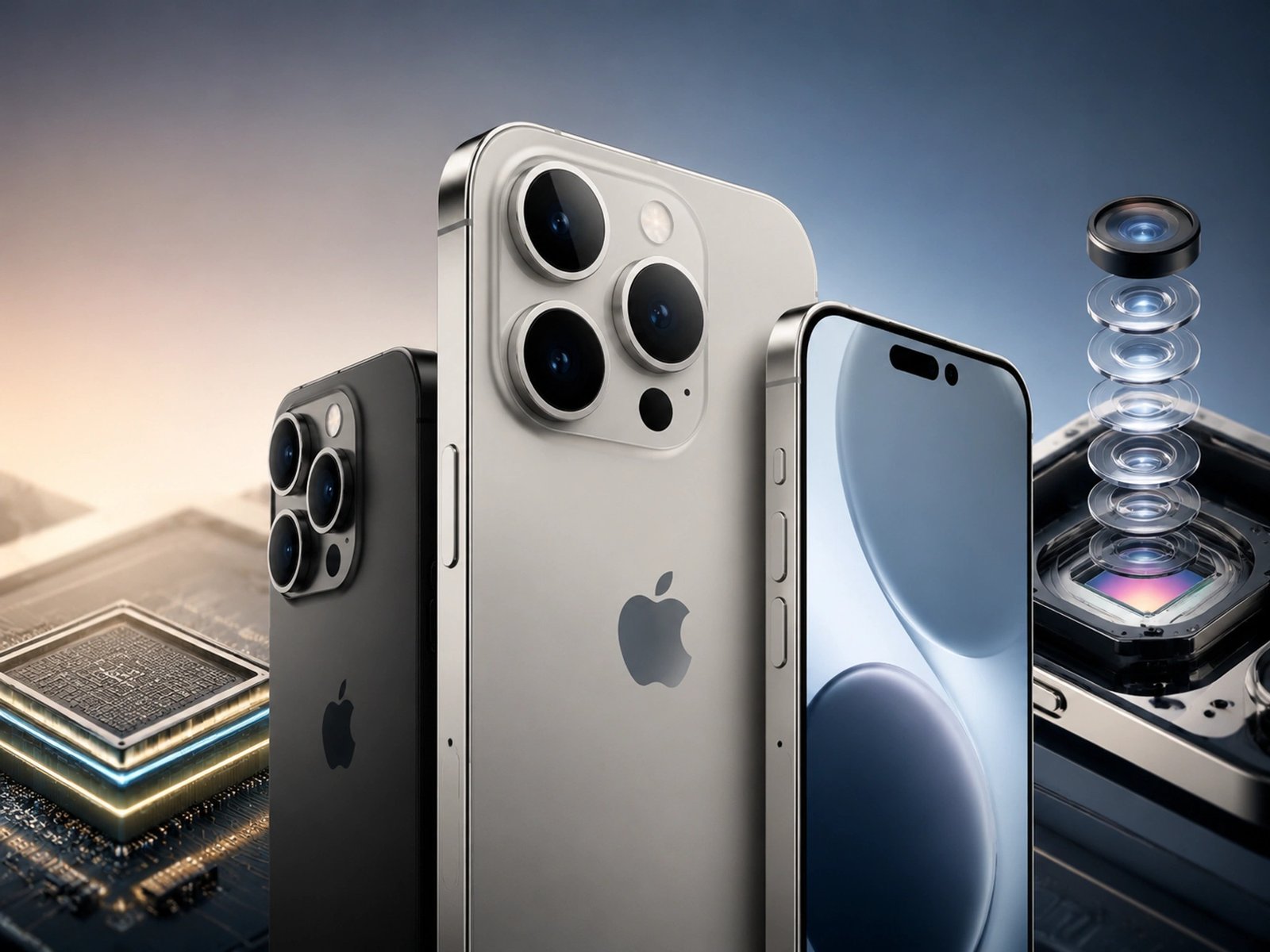
The picture of Apple’s next iPhone is coming into focus. Between supply-chain leaks out of Asia and patents Apple has filed over the past year, an iPhone 18 is emerging that breaks from the usual “everything ships in September” playbook and, for the first time in years, brings a genuine manufacturing-process jump.
A launch split into two waves
The most talked-about change isn’t a hardware spec at all — it’s the calendar itself. According to current leaks, Apple would split the iPhone 18 lineup into two separate launches: the Pro, Pro Max, and the rumored Fold would arrive in fall 2026 as usual, while the base, e, and Air2 models would slip to spring 2027. Splitting the lineup this way would let Apple stagger production and put the spotlight on the foldable, its most ambitious device to date.
The jump to 2 nanometers: the A20 Pro chip
The Pro lineup’s centerpiece would be the A20 Pro, Apple’s first chip built on TSMC’s 2nm node. The jump isn’t just a naming exercise: leaks point to Apple adopting WMCM (Wafer-level Multi-Chip Module) packaging, a technique that stitches multiple chiplets into a single package and that Apple has so far reserved for its Mac silicon. In practice, that should translate into better performance per watt and, in theory, less throttling under sustained load.
More memory, and Apple’s own connectivity stack
The Pro models would step up to 12GB of LPDDR5X RAM, a meaningful bump over the current generation that lines up with the Apple Intelligence features the company keeps pushing. On connectivity, the most consistent rumor pairs the C2 modem — successor to the C1 Apple introduced this year — with a new N2 chip handling Wi-Fi and Bluetooth, another step in Apple’s push to rely less on outside suppliers like Qualcomm and Broadcom.
Cameras: variable aperture and stacked sensors
The camera system is also getting a philosophy change. Leaks describe a mechanical variable aperture, something Apple has never offered on an iPhone, letting the camera physically control how much light hits the sensor instead of leaning entirely on software processing. That would pair with three-layer stacked sensors built by Samsung, a design meant to capture more detail in high-contrast scenes without pushing shadow noise up.
A design that refines the essentials
The Camera Control button introduced with the iPhone 16 would reportedly get reworked after complaints about its touch sensitivity. Battery capacity would climb past 5,000 mAh on the larger models, and the Dynamic Island would shrink by roughly 35%, freeing up screen space without losing any of its functions. New color options rumored to join the lineup include Dark Cherry and Light Blue, pushing the palette toward more saturated tones.
How much the iPhone 18 will cost
Pricing leaks point to a broad increase, sharper at the top of the lineup:
| Model | Estimated price (US) |
|---|---|
| iPhone 18 Pro | from $1,299 |
| iPhone 18 Pro Max | from $1,399 |
| iPhone Fold | $2,000–$2,500 |
In Europe, final prices would include each country’s VAT, which has historically pushed the gap versus US pricing well beyond a simple currency conversion.
Launch calendar
If the leaks hold, the timeline looks like this:
- September 9, 2026: keynote announcement.
- September 12, 2026: pre-orders open.
- September 18, 2026: general availability.
US vs. Europe: not quite the same iPhone
As in previous generations, hardware would vary by region. In the US, Apple would stick with its eSIM-only design, with no physical tray, while units sold in Europe would keep the physical SIM tray. 5G connectivity would also differ: the US market would get mmWave support, which is absent from European units limited to Sub-6GHz.
With the keynote still months away, all of this remains leak territory and should be taken with a grain of salt — but the sheer volume of details, and how consistently they line up across unrelated sources, suggests the iPhone 18 could be one of Apple’s deepest redesigns in years.